

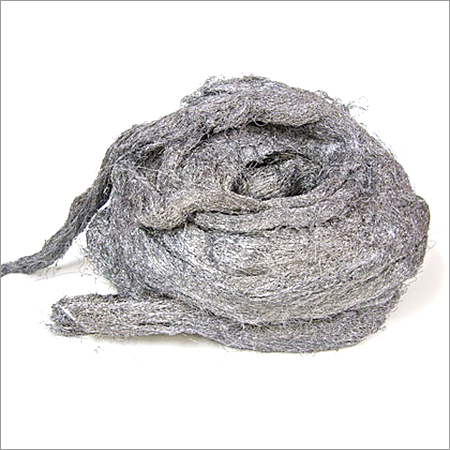
Lead Wool
Product Details:
- Product Type Lead Wool
- Shape Strands / Ropes / Wool
- Chemical Composition Pb (Lead) - 99.97% minimum
- Purity 99.97% - 99.99% Pure Lead
- Thickness Flexible, Generally 1 mm to 6 mm
- Dimension (L*W*H) As per Order
- Weight Customized / As Required
- Click to view more
X
Lead Wool Price And Quantity
- 100 Kilograms
Lead Wool Product Specifications
- Flexible, Generally 1 mm to 6 mm
- 99.97% - 99.99% Pure Lead
- As per Order
- Strands / Ropes / Wool
- Pb (Lead) - 99.97% minimum
- Lead Wool
- Customized / As Required
- Dark Grey
- 327C
- Approx. 13 MPa
- Matte
- IS 6840:1979, BS 1178:1982
- Approximately 11.34 g/cm3
- Coils, Rolls, or Tins
- High Purity Soft Lead Filaments
Lead Wool Trade Information
- Cash in Advance (CID), Cheque
- 1-15 Kilograms Per Day
- 1-15 Days
- Yes
- Sample costs shipping and taxes has to be paid by the buyer
- As per client requirement.
- West Bengal, East India
Product Description
Our vision to excel and establish a strong foothold in the market has assisted us to evolve as a prominent manufacturer and supplier of Lead Wool. We use optimum quality lead, sourced from rusted vendors to process this wool. It consists of thin strands of lead metal that can be used to cold-caulk cast iron and steel pipes. Clients can avail this Lead Wool from us in different specifications as per their requirements.
Features:
- Easy to use
- Moisture proof
- High tensile strength
Lead Wool
- Grade: Commercial/Chemically Pure/Antimonial
Superior Purity and Performance
Manufactured exclusively from high purity lead, this lead wool is never alloyed or diluted. Its chemical composition is guaranteed to contain at least 99.97% pure lead, ensuring optimal physical properties like a consistent density of approximately 11.34 g/cm. The products high purity enables excellent flexibility and softness, catering to industries that demand both reliability and safety.
Flexible Solutions for Industry Needs
Lead wool is provided in convenient packing options, such as coils, rolls, or tins, and can be adjusted in weight and dimensions to meet precise requirements. Its flexible structure, generally available in thicknesses ranging from 1 mm to 6 mm, makes it ideal for sealing, jointing, and radiation protection. The products adaptability ensures that it integrates smoothly into diverse applications in construction, plumbing, and the nuclear sector.
FAQs of Lead Wool:
Q: How is lead wool typically used in industrial applications?
A: Lead wool is mainly utilized for sealing pipe joints, filling gaps in machinery, and providing radiation shielding. Its malleability allows for effective sealing and protection in installations that require dense, soft materials to block or absorb emissions, making it a preferred choice in plumbing and shielding applications.Q: What are the benefits of using high purity lead wool for pipe jointing?
A: High purity lead wool delivers an exceptional seal due to its dense, flexible structure. When packed into pipe joints, it conforms tightly to irregular surfaces, preventing leaks and withstanding vibrations or thermal expansion. Its purity ensures minimal corrosion, enhancing long-term reliability.Q: Where is lead wool commonly applied for radiation shielding?
A: Lead wool is widely employed in environments such as nuclear facilities, x-ray rooms, and laboratories that demand robust radiation protection. Its high density and purity provide effective shielding against harmful emissions, safeguarding personnel and sensitive equipment.Q: What standards does this lead wool comply with?
A: This lead wool is manufactured in accordance with Indian Standard IS 6840:1979 and British Standard BS 1178:1982, ensuring its quality, consistency, and safety for industrial use.Q: Can the weight and dimensions of lead wool be customized?
A: Yes, lead wool is available in customized weights and dimensions to suit individual project needs. Whether you require specific lengths, widths, thicknesses, or packaging options, manufacturers and suppliers are able to accommodate bespoke orders.Q: What is the process for installing lead wool in pipe jointing applications?
A: To use lead wool in pipe jointing, strands are manually packed into the joint or gap using appropriate tools. The materials softness enables it to compress and form a tight seal, helping to prevent leaks and effectively absorb vibrations.Tell us about your requirement

Price:
Quantity
Select Unit
- 50
- 100
- 200
- 250
- 500
- 1000+
Additional detail
Mobile number
Email

Other Products in 'Lead Products' category

We are mainly dealing in East India.
Contact Details

- 42, Netaji Subhas Road, 1st Floor, Kolkata - 700001, West Bengal, India
- Phone : 08045477205
DAGA METAL INDUSTRIES
GST : 19AABHJ4048J1Z4
GST : 19AABHJ4048J1Z4

- Mr. Mahendra Kr. Daga (Proprietor)
- Mobile : 08045477205
- Send Inquiry
 Send Inquiry
DAGA METAL INDUSTRIES
All Rights Reserved.(Terms of Use)
Developed and Managed by Infocom Network Private Limited.
Developed and Managed by Infocom Network Private Limited.
